$0.43 Doesn't Mean 43%. Sort Of.
A YES contract on Polymarket trading at $0.43 prices the event at a 43% probability — but only if the market is liquid, the order book is balanced, and nobody is dumping into it. In thin markets the price moves on a single $5K bet. In deep markets it moves only when smart money does.
The difference between those two cases is the entire trader's edge. Most casual users read the price as gospel. Sharps read who's pricing it. WinPolymarket is the independent tracker that surfaces who's behind the move — pre-beta opens July 2026.
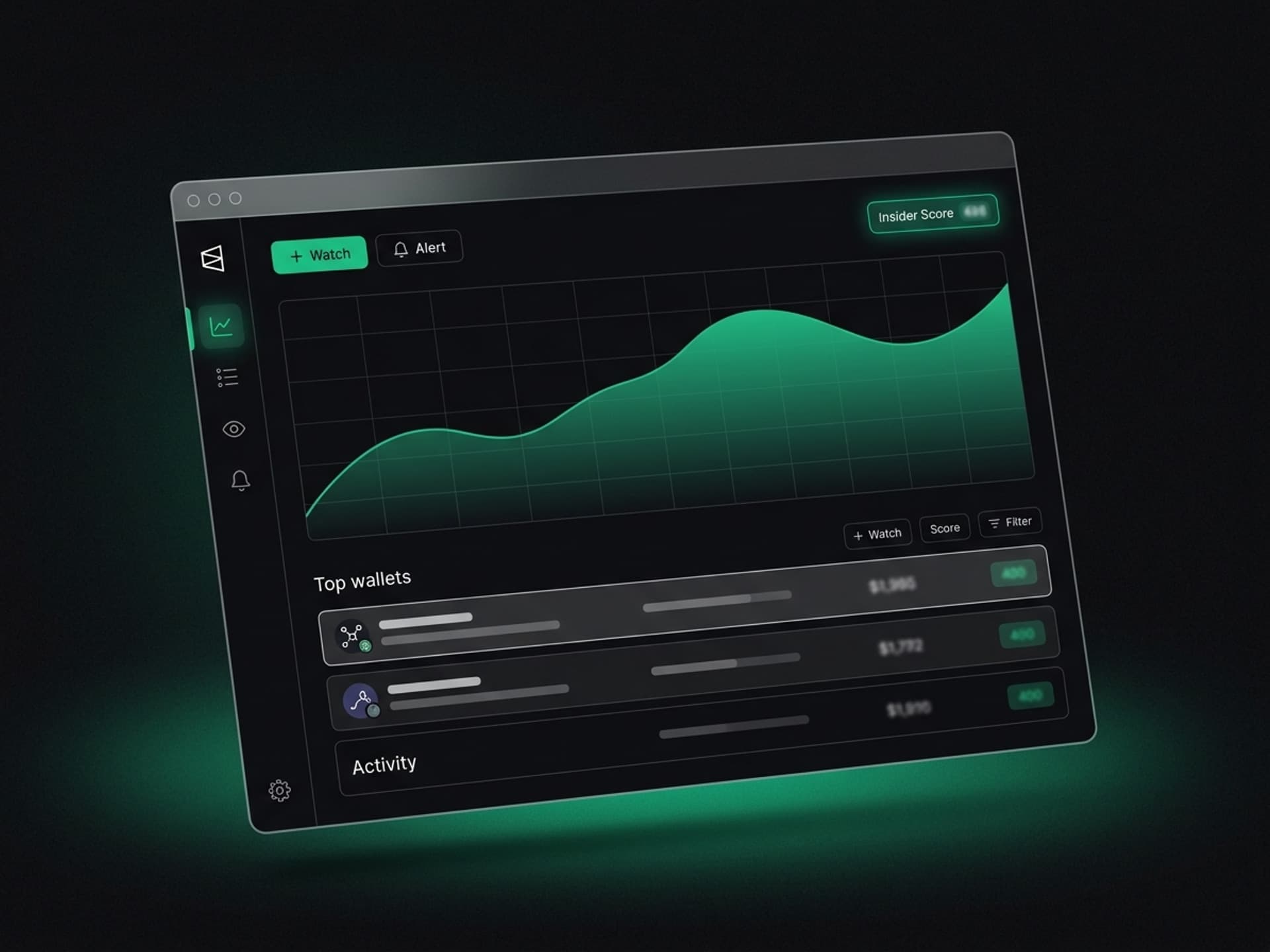
Follow Polymarket smart money before the public.
How Polymarket Odds Actually Work
Every Polymarket market is a binary contract: YES pays $1 if the event happens, $0 if it doesn't. NO is the mirror. The live price between $0.01 and $0.99 is the market's collective probability estimate in dollars.
Read it like this:
- YES @ $0.43 = market thinks YES is 43% likely
- NO @ $0.57 = market thinks NO is 57% likely
- They should always add to ~$1.00. If they don't, somebody is offering arbitrage. Check liquidity before celebrating.
That's the surface. Underneath it, four variables decide whether the price is meaningful.
The Four Variables That Make a Price Real
Polymarket prices are not poll numbers. They are auction outcomes from a continuous order book. Four things drive whether the price you see is signal or noise.
1. Open interest (depth)
Open interest is the total dollar value of contracts currently held. A market with $5M open interest has been stress-tested by real money. A market with $30K has not.
| Open interest | Price reliability | What it means |
|---|---|---|
| $0 - $10K | Very low | One trader can swing the price 10-30%. Don't trust the level. |
| $10K - $100K | Low | A few large trades will dominate the print. |
| $100K - $1M | Medium | Multiple opinions priced in. Watch for whale activity. |
| $1M+ | High | Aggregated public belief. Hard to manipulate. |
A 5% Polymarket price on a market with $5M of open interest is more reliable than a 5% price on a market with $5K. Same number, completely different signal value.
2. Order book shape
The order book is the list of pending YES/NO bids and asks. A balanced book (similar amounts wanting to buy and sell at nearby prices) means the market has consensus. A lopsided book (huge sell wall at $0.45, almost no buy interest below $0.40) means somebody big is trying to anchor the price down.
Reading the order book is the second skill after reading the price. The native Polymarket UI shows the top-of-book depth — sharps watch the layers behind it.
3. Recent trade flow
When was the last trade? How big was it? Did it come from a wallet that's been right before?
This is where smart-money tracking earns its edge. A $250K bet from a wallet that won the 2024 Trump market is a completely different signal from a $250K bet from a wallet that opened yesterday.
4. Resolution clarity
Read the resolution criteria before you size a position. Markets with ambiguous resolution (e.g., "Will X happen by Y?" with vague "happen" wording) can settle in the dispute oracle for days and resolve against your read of the news.
Sharp rule: if you can't explain the resolution rule in one sentence to a friend, the market is too risky to size up on.
How to Convert Polymarket Prices Into Expected Value
The math is trivial. The discipline isn't.
Expected value of a YES bet at price p:
EV = (1 - p) × $1 - (p × $1)
   = $1 - 2p
But that assumes the market price equals true probability. Your edge is your estimate vs the market's estimate. If you believe the true probability is 60% and the market prices it at 43% (YES @ $0.43), your edge per dollar is:
edge = $0.60 - $0.43 = $0.17 per $1 staked
That's a 17 cent edge — huge if you have it consistently. The problem is most casual traders over-estimate their estimate. Polymarket's smart money usually has better information than you do.
That's the core insight WinPolymarket is built around. Instead of betting against sharps, follow them. Claim your spot for pre-beta access — first 5,000 wallets get the launch alert.
Claim your spot for pre-beta access →
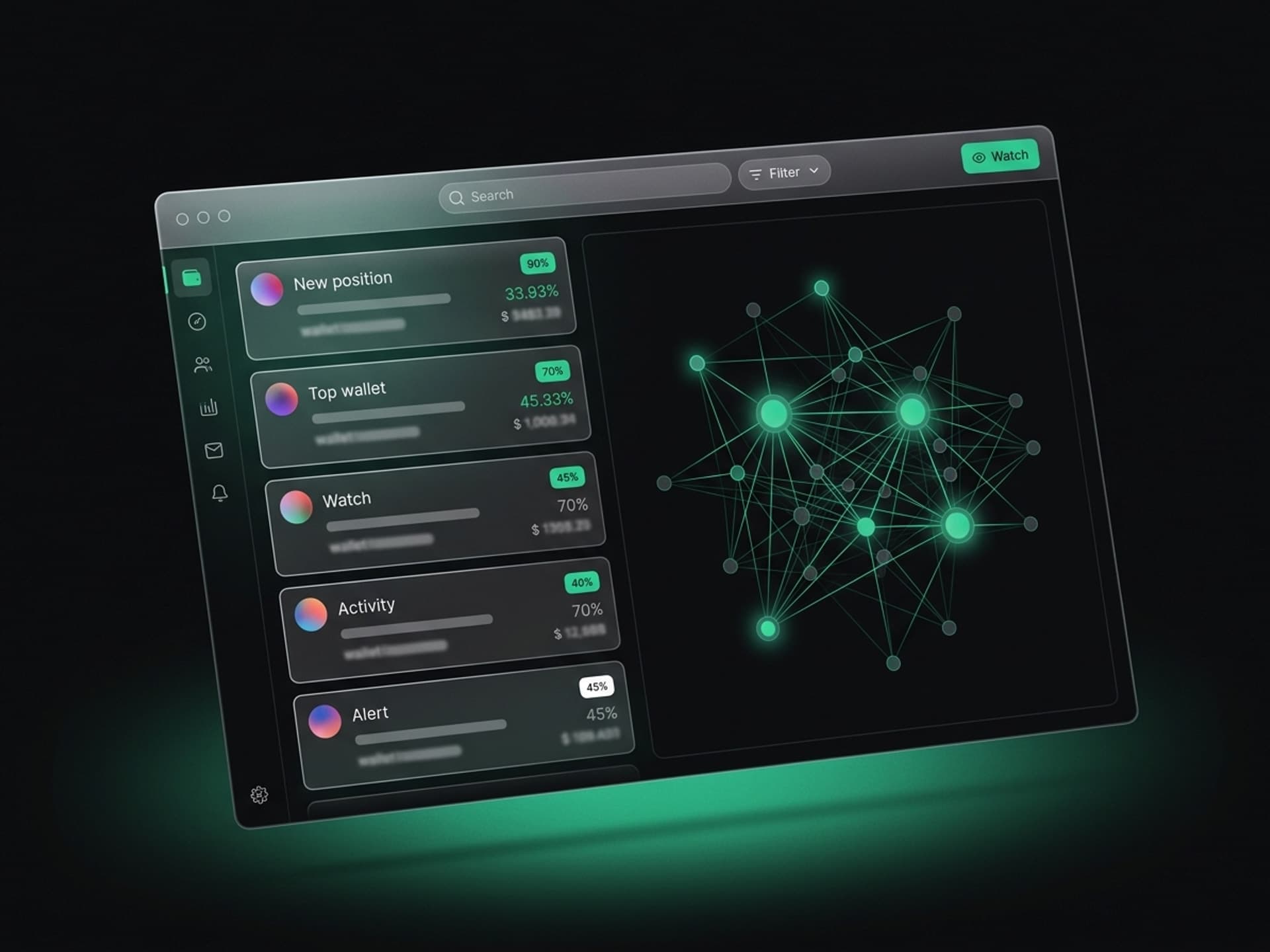
Follow Polymarket smart money before the public.
The 60-Second Routine Pros Run Before Every Bet
This is the actual pre-bet checklist a $5K+ bankroll trader runs. Takes under a minute. Saves entire bankrolls.
Step 1: Get on the WinPolymarket pre-beta
Claim your spot here so the launch email lands the day our tracker opens. Once live, the next four checks below run automatically per market.
Step 2: Read the price + spread
YES + NO should sum near $1.00. If the spread (YES_ask - YES_bid) is wider than 2 cents, the market is illiquid. Cut your intended size or skip.
Step 3: Read the open interest
Under $100K open interest and you're a price-mover, not a price-taker. Size accordingly.
Step 4: Read the recent trades
Pull the last 10 trades. Are they cluster-buying or cluster-selling? Whose wallets? On native Polymarket this is manual — on the WinPolymarket tracker it's automatic.
Step 5: Read the resolution criteria — twice
This is the highest-edge step a beginner can take. Read it once. Read it again. If anything ambiguous, walk away.
Step 6: Size the bet
Never more than 5% of your bankroll on a single binary outcome. Sharps cluster 1-2% positions across 10-20 markets, not one big bet.
Common Reading Mistakes That Cost Real Money
Three patterns cost casual users the most.
1. Treating price as truth in a thin market
A 65% price on a $20K-OI market means almost nothing. A 65% price on a $5M-OI market is a strong probabilistic claim. Same number, very different reliability. Always pair price with open interest.
2. Ignoring slippage on size
A $5K bet on a market with $40K of open interest will eat 3-8% of the price by itself. Your effective entry is worse than the screen price. Pros simulate fill before they click. Casual users learn after.
3. Misreading mid-market moves as news
When a market repriced 4 points in 20 minutes, was it news or was it a single whale wallet? The native UI doesn't tell you. The on-chain trail does — and so does our whale-tracking layer.
Frequently Asked Questions
Are Polymarket odds the same as betting odds?
No, but they convert easily. A Polymarket YES price of $0.43 equals 43% implied probability, which converts to decimal odds of 2.33 ($1.00 / $0.43) or American odds of +133. Polymarket's binary format is closer to a stock exchange than a sportsbook line, which is why it's cheaper for most market types.
Why do YES + NO sometimes add to more or less than $1?
Tiny rounding gaps are normal. Larger gaps (more than 1-2 cents) signal arbitrage opportunity, but they're usually killed within seconds by bots. If you see YES + NO summing to $0.97 with significant volume, something is being mispriced — investigate before assuming it's free money. Tracking which wallets exploit these gaps is part of the WinPolymarket flow alerts.
Can I trust Polymarket odds the same way I trust polls?
Often more, in liquid markets. Polymarket priced the 2024 Trump presidency at 60%+ for weeks before any major poll moved. The financial incentive forces traders to weight private information. Polls don't. We cover this gap in detail in Polymarket Election Markets: How Prices Beat Polls.
How fast do Polymarket odds move?
In high-volume political markets, prices can move multiple percentage points per minute around news drops. Thin markets can sit static for hours until one trader moves them. Speed correlates with open interest and how recently public news has dropped.
What's a "live odd" vs a "settled odd" on Polymarket?
The live odd is the current order-book midpoint. The settled odd is the final resolution — $1 or $0. Most traders care about the live odd. Sharps care about the path between them and where smart-money flow shows up along the way. Claim your spot for the launch alert on our wallet-tracking tracker.
What's the best app to read Polymarket odds with smart-money context?
The native Polymarket interface shows price + order book + your own positions. It does not show wallet history or per-trader Insider Scores. WinPolymarket layers that on top with real-time whale alerts and public wallet profile pages. Pre-beta opens July 2026 with a 5,000-player cap.
Are Polymarket odds legal to read in the United States?
Yes. Reading and analyzing public on-chain data is fully legal. Placing bets on Polymarket from the US is not — Polymarket geoblocks US persons under a 2022 CFTC settlement. For US-legal alternatives see Polymarket vs Kalshi.
The Bottom Line
A Polymarket price is a number on a screen. The trader edge is what's behind the number — open interest, order book shape, recent flow, resolution clarity, and which wallets are moving the price.
Casual users read the number. Sharps read the wallets. WinPolymarket is the layer that surfaces the wallet view in real time.
Claim your spot for pre-beta access →
WinPolymarket is independent and not affiliated with, endorsed by, or sponsored by Polymarket Holdings PBC. All trademarks belong to their respective owners.
Want in early? Claim your spot on winpolymarket.com →