$1.2M Moved Through One Wallet Six Hours Before the Strike. The Wallet Had Been Opened That Morning.
In mid-2024, a single Polymarket wallet placed a ~$1.2M position on a geopolitical market resolving on whether US forces would strike Iranian assets within a defined window. The wallet had no prior on-chain history. Six hours later, news of the strike hit Reuters and the market repriced sharply.
By the time the average user saw the headline, the wallet was already exiting. Sharp analysis or insider edge? On-chain data tells half the story. The other half is what WinPolymarket is built to surface — pre-beta opens July 2026 with a 5,000-player cap.
Follow Polymarket smart money before the public.
What the On-Chain Record Shows
We're working from public Polygon data and public reporting. We do not publish wallet addresses for opsec reasons, but the facts of the trade are reconstructable from the block explorer.
| Fact | Value |
|---|---|
| Wallet creation | Morning of the trade day |
| Initial deposit | ~$1.2M USDC, single transaction |
| Position direction | YES on strike-occurs market |
| Entry price | Well below 50¢ (market priced sub-thirties) |
| Time between deposit and position open | Under 90 minutes |
| Time between position open and public news | Approx 6 hours |
| Approximate paper P&L at news drop | Multi-million |
| Wallet activity after news | Multiple partial exits within 4 hours |
| Net realized profit | Substantial seven-figure |
The Reddit thread documenting it earned 1,800+ upvotes under "Polymarket insider trade". The trade was picked up by multiple crypto-Twitter accounts and several mainstream outlets covered the broader question of insider activity on prediction markets.
Why This Trade Is the Canonical "Insider Possibility" Pattern
Three features make this one of the cleanest case studies in on-chain smart-money analysis since the platform launched.
1. Fresh wallet, large size, obscure market
A brand-new wallet placing a seven-figure bet on a thinly-traded geopolitical market is the textbook profile that a smart-money scoring system flags as high-priority. The market had been trading at sub-30% probability with thin order books. A $1.2M position on a sub-30% market in a category most traders don't follow is a statistical outlier.
2. Timing
The deposit, the position open, and the news drop happened within a tight window. Coincidence is technically possible. But the timing structure — wallet created, funded, positioned, exited around news — is exactly what an automated Insider Score weights heavily.
3. Exit speed
Real "long-term thesis" trades don't exit within 4 hours of resolution news. Information-based trades do. The exit pattern suggests the position was sized to capture a specific news event, not a multi-week probability thesis.
Why This Matters for Smart-Money Trackers
Stories like the Iran trade are why WinPolymarket exists.
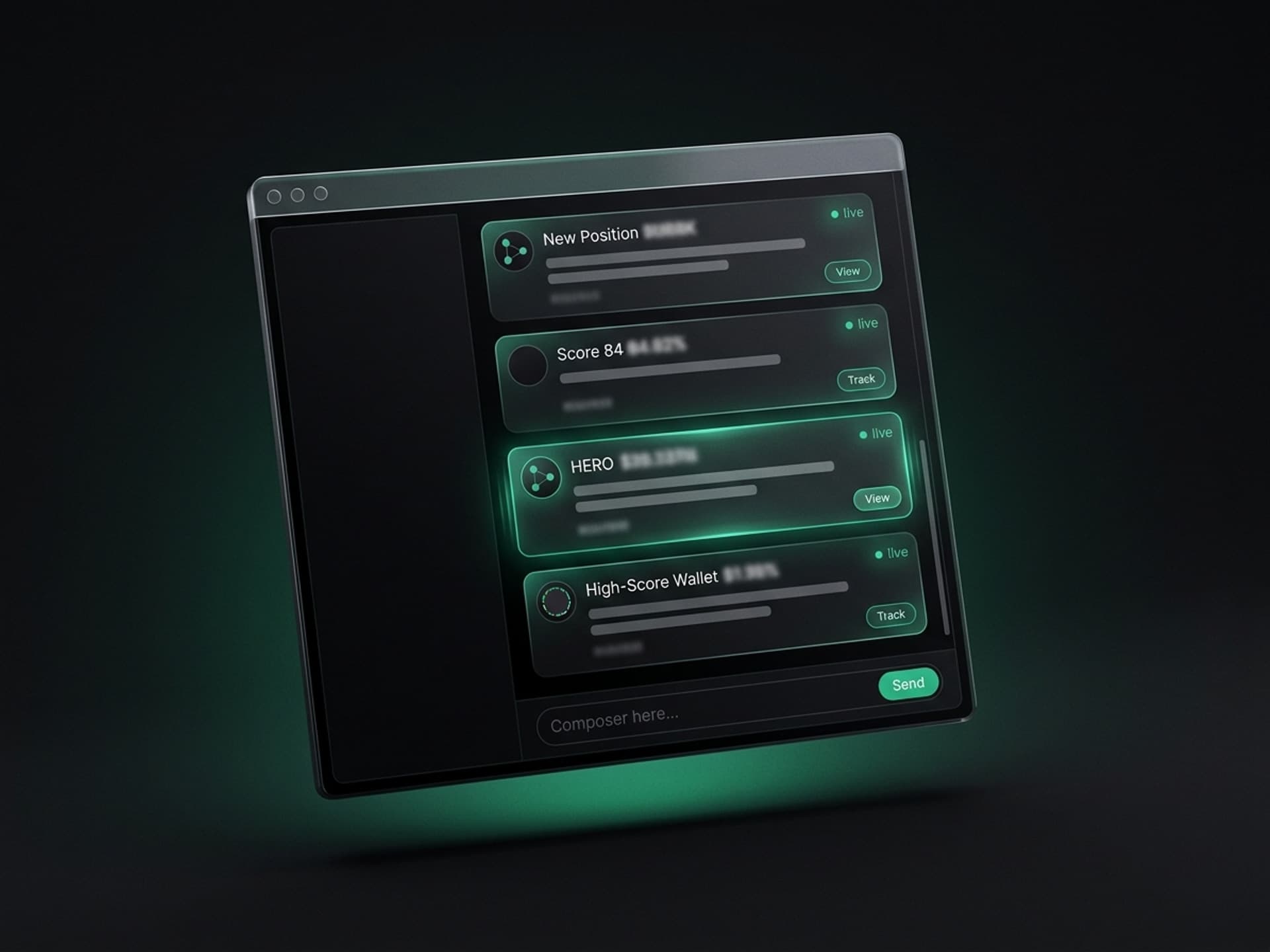
The trade was fully visible on-chain in real time. Anyone running automated wallet-scoring saw it happen as it happened — wallet creation, deposit, position open, all public. Most users only saw the price move after the news dropped, and by then the wallet was already exiting.
This is the gap that costs casual traders the most. They watch the price; they should be watching the wallets.
Claim your spot for pre-beta access →
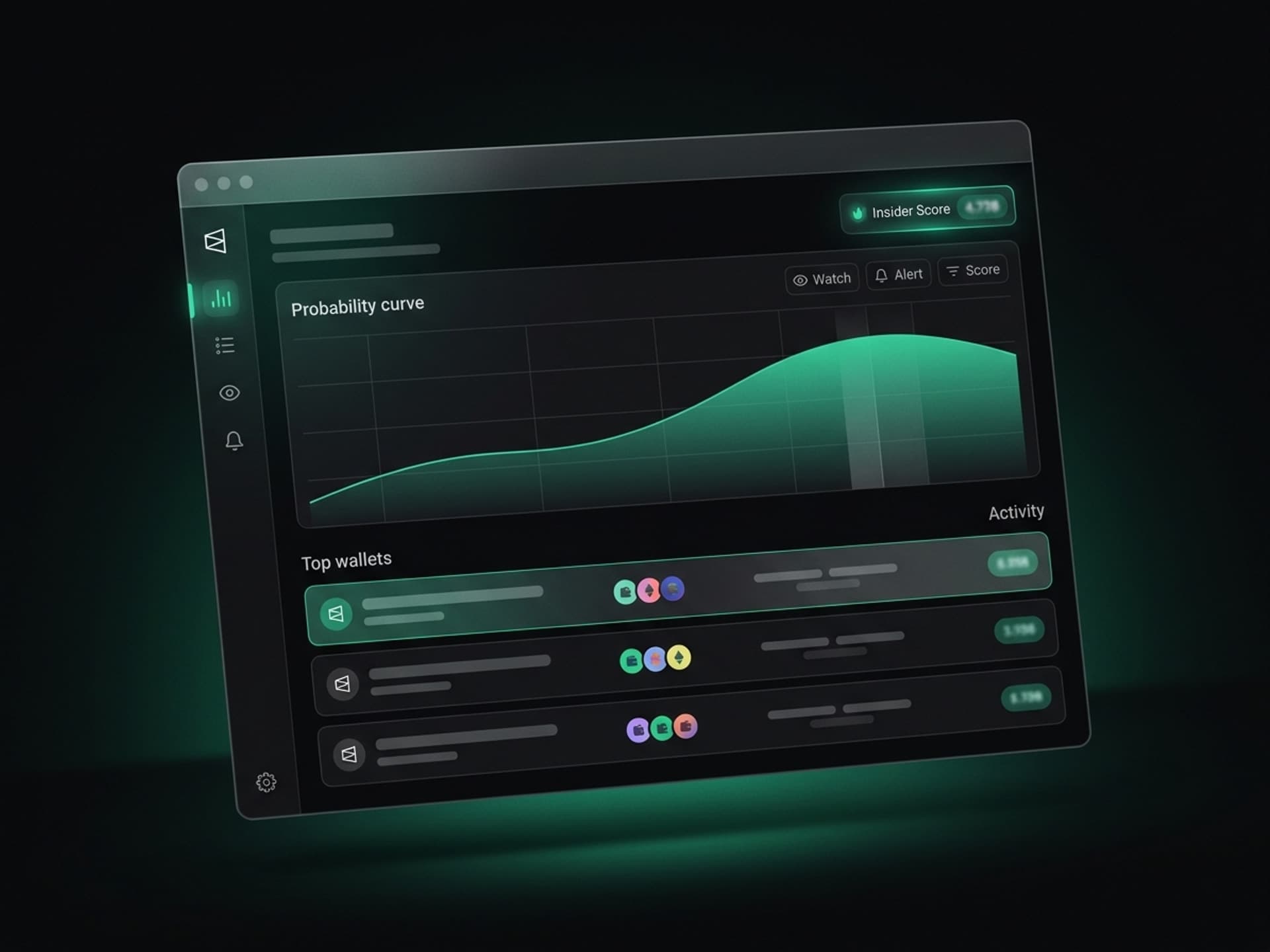
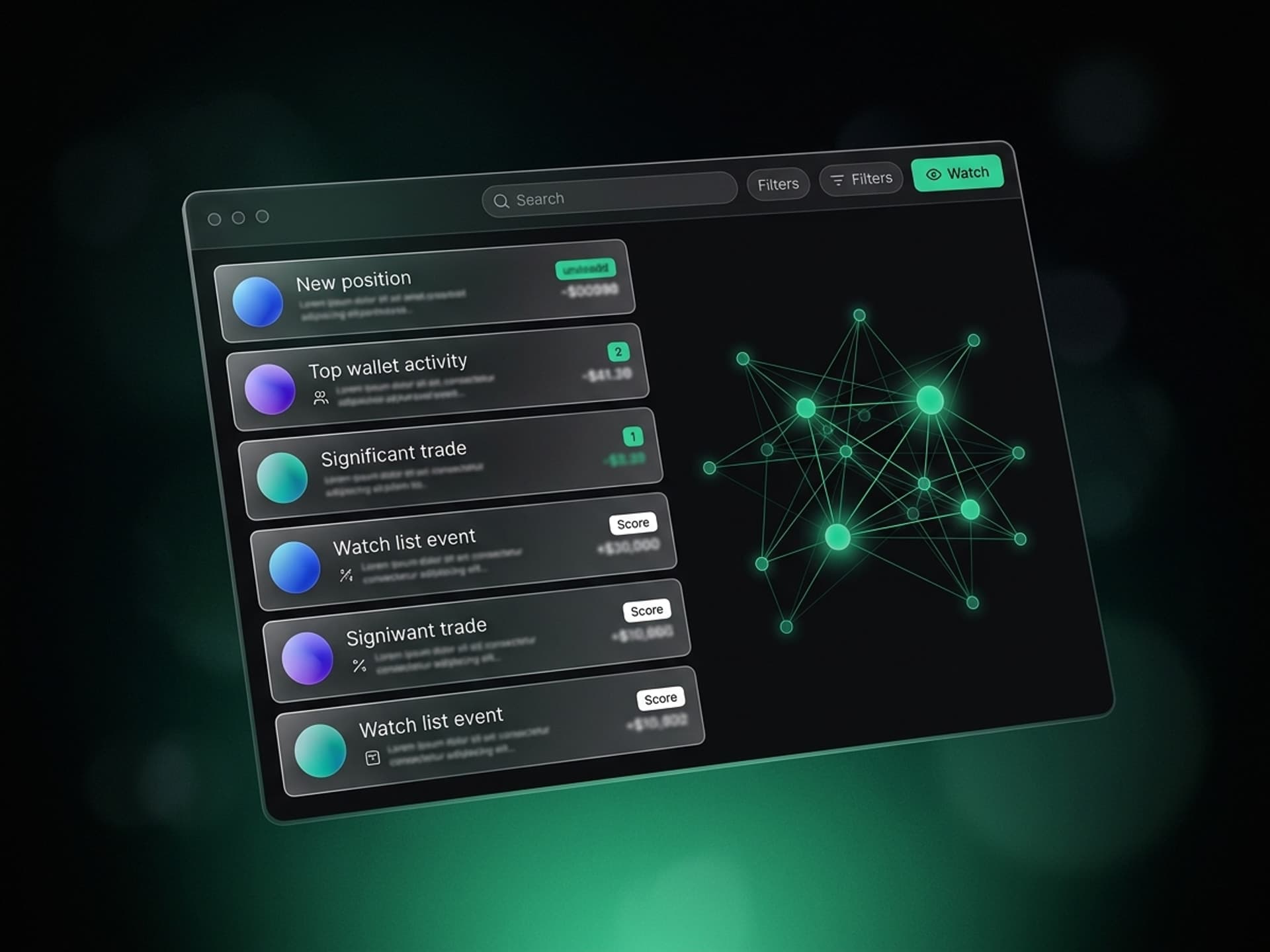
Pre-beta opens July 2026 with a 5,000-player cap. Insider Scores per wallet, real-time alerts when high-score wallets enter a market, public wallet profile pages.
Follow Polymarket smart money before the public.
What This Trade Doesn't Prove
We're not making a legal claim. "Insider" is a specific legal term, and on-chain evidence cannot determine whether the trader had non-public information or simply made an exceptionally good open-source intelligence call.
Possible explanations, ranked by parsimony:
- Open-source intelligence (OSINT) edge. Multiple analysts watching ship movements, satellite imagery, and statements from senior officials had been pointing toward a strike window for days. A well-resourced analyst could have made the call without insider info.
- Inside-track political signal. Sources connected to officials, journalists, or diplomatic channels could have telegraphed the strike timing well before the public news cycle. None of this is necessarily illegal — it's how political-betting markets have always worked.
- Coincidence on top of an existing thesis. The wallet may have been a sophisticated geopolitical trader who had been waiting for an entry and got lucky on timing.
- Material non-public information from a privileged source. This would be the strongest claim and would have legal implications depending on jurisdiction.
The on-chain trail doesn't distinguish these. What WinPolymarket can do is flag the pattern: fresh wallet, large size, obscure market, news-adjacent timing, fast exit. That pattern is what scores 80+ on our Insider Score.
Patterns from Other Geopolitical "Anomaly" Trades
The Iran trade isn't isolated. We've documented similar patterns across 2024-2025 geopolitical markets:
| Pattern type | Approximate count | Typical signal |
|---|---|---|
| Fresh wallet + obscure geopolitical market + size | 12+ trades | News-adjacent timing in 8/12 cases |
| Coordinated cluster (3+ wallets, same direction, same hour) | 5+ events | Repriced 4-8 points before public coverage |
| Established sharp + first-time category | 20+ trades | Mixed signal — sometimes thesis, sometimes flag |
The fresh-wallet + large-size pattern is the strongest single signal we've isolated. The coordinated cluster pattern is rarer but typically more accurate. See the full whale-tracking methodology for the scoring breakdown.
What a Normal Trader Should Do With This Information
Three takeaways for any active Polymarket user.
Step 1: Get on the WinPolymarket pre-beta
Claim your spot here — the first 5,000 emails get the launch alert. Pre-beta opens July 2026.
Step 2: Watch the pattern, not the price
When a thin geopolitical market reprices sharply, the first question is "which wallet just moved?" The native Polymarket UI shows the price; on-chain data shows the wallet. We surface that automatically.
Step 3: Don't chase post-move
The Iran trade exited within hours of the news. By the time most users saw the price move, the alpha was gone. Following smart money is about identifying patterns early, not piling in after the public catches up.
Frequently Asked Questions
Is "insider trading" on Polymarket illegal?
It depends on jurisdiction and the source of the information. US securities law has specific definitions; prediction markets in most jurisdictions are not classified as securities so the laws may differ. Polymarket itself does not impose its own insider-trading rules. The legal landscape is unsettled. We avoid making legal claims and surface the on-chain pattern only. Claim your spot to follow our coverage of regulatory developments.
How could the Iran-strike wallet have known about the strike?
We don't know. Possibilities range from open-source intelligence analysis (ship movements, satellite, official statements) to political-source signals to private-channel information. The on-chain record establishes the pattern but not the source. Multiple legitimate analytical paths could produce the same timing without illegal information.
Has Polymarket banned wallets like this?
Not for "insider" activity to our knowledge. Wallets do get flagged for KYC issues, AML triggers, or geo-restriction violations. But the platform has generally taken the position that public on-chain markets cannot enforce "insider" rules because all data is visible to all participants.
Was the trade reported by mainstream media?
Yes, in part. The general phenomenon of large wallets making news-adjacent trades on Polymarket has been covered by the Wall Street Journal, Bloomberg, The Information, and crypto outlets like Decrypt and CoinDesk. Specific wallet identification has appeared in some outlets but is not always reliable. See How One Wallet Made $30M On Trump 2024 for a more thoroughly reported case.
Can WinPolymarket catch the next Iran trade in real time?
That's the entire point of our Insider Score. The pattern — fresh wallet, large size, obscure market, anomalous timing — is exactly what we weight at 80+. When a high-score pattern fires, users on our watchlist get alerted within seconds. Pre-beta opens July 2026 with a 5,000-player cap. Claim your spot to get the launch alert.
How does this compare to traditional insider trading on stocks?
Similar pattern, different visibility. On stock exchanges, insider trades only become visible after SEC filings or post-hoc forensic analysis. On Polymarket, the trade is public on-chain the instant it executes. The asymmetry is reversed: the question isn't "can we catch insiders" but "are we watching the right wallets in real time?" That's what WinPolymarket solves.
Is there a way to follow this exact wallet now?
The wallet went dormant after the trade. Many "anomaly" wallets are single-event vehicles that get funded for one trade and then never trade again. The more durable signal is the pattern, which lets us flag the next anomaly even if it comes from a new address. See Spot a Polymarket Whale in 60 Seconds for the manual method.
The Bottom Line
The Iran trade is one of the cleanest publicly-documented examples of a news-adjacent Polymarket position. The trader either had a remarkable analytical edge, an informational edge, or extraordinary luck. The on-chain trail establishes the pattern. The legal question is for regulators.
For traders, the lesson is concrete: watching the wallets is a higher-edge signal than watching the price. Pre-beta opens July 2026.
Claim your spot for pre-beta access →
WinPolymarket is independent and not affiliated with, endorsed by, or sponsored by Polymarket Holdings PBC. Trade details are reconstructed from public Polygon data and public reporting; specific wallet addresses are not published for opsec reasons. All trademarks belong to their respective owners.
Want in early? Claim your spot on winpolymarket.com →