Augur Was the First. Polymarket Took 99% of the Volume.
Augur launched in 2018 as the first fully-decentralized prediction market. It raised $5M+ in a 2015 ICO, pioneered the entire category, and ran for years. By 2024, Polymarket processed more volume in a single week than Augur did in its entire history.
Two decentralized markets, same broad design philosophy, drastically different outcomes. The reasons are concrete and worth understanding if you're picking a venue or tracking smart money across decentralized prediction markets. Pre-beta opens July 2026.
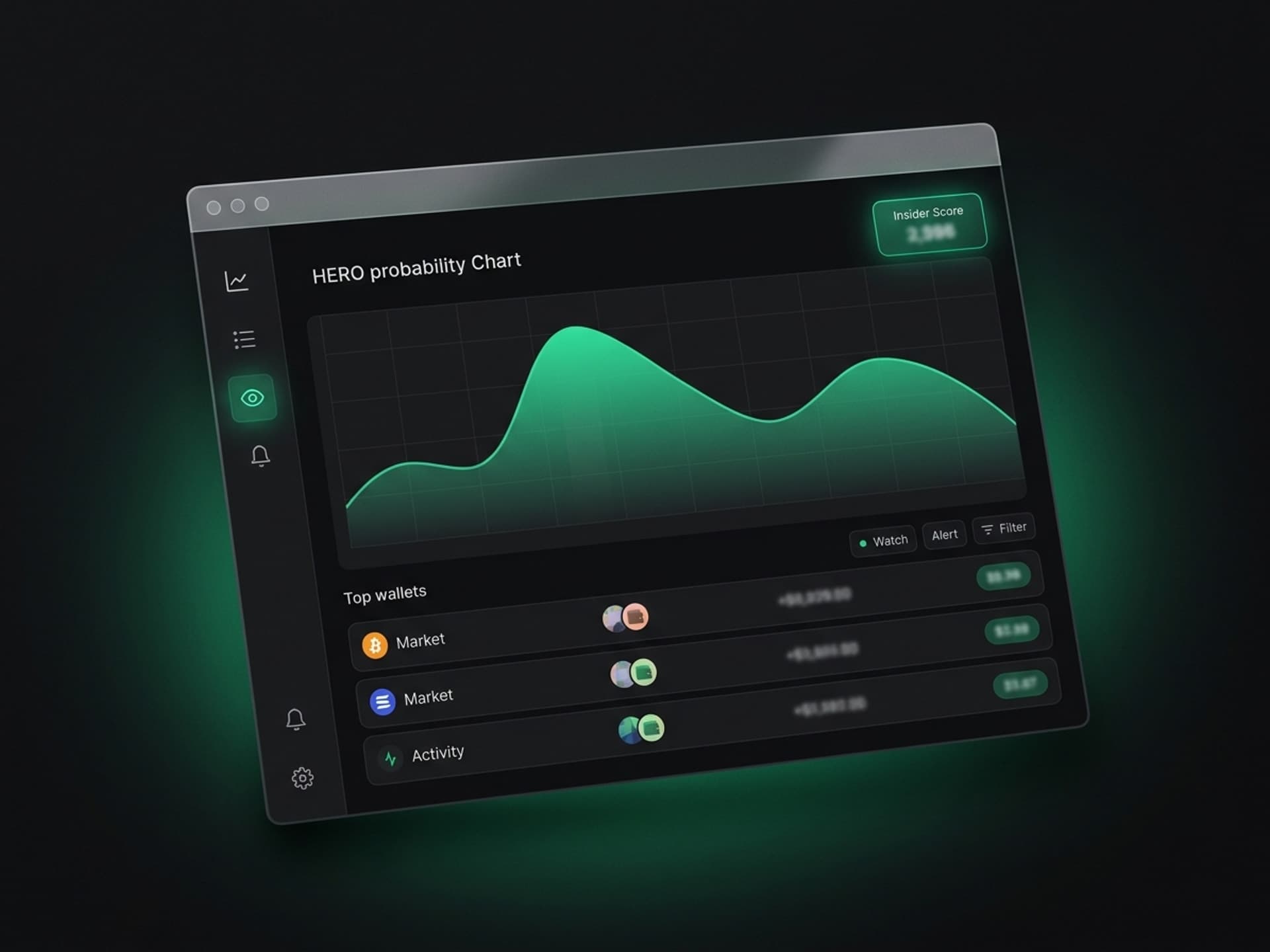
Follow Polymarket smart money before the public.
TL;DR Comparison
| Criterion | Polymarket | Augur |
|---|---|---|
| Launched | 2020 | 2018 |
| Network | Polygon (L2) | Ethereum mainnet |
| Settlement asset | USDC | DAI (later versions); ETH (V1) |
| Trading fees | 0% on most markets | Variable, market-creator dependent |
| UX | Web/mobile, polished | DApp-style, technical |
| Gas costs per trade | $0.01 - $0.10 | $5 - $50+ (Ethereum gas) |
| Active markets (peak) | 1,000+ | <100 |
| Cumulative volume | $10B+ | <$50M |
| Order book | On-chain CLOB | AMM-based, fragmented |
| US legal status | Geoblocked since 2022 | No formal block, but discouraged |
Where Augur Lost
Three structural decisions killed Augur's commercial trajectory. None of them were about ideology.
1. Ethereum mainnet was too expensive
Augur ran on Ethereum L1 from launch. By 2020, gas costs for a single trade routinely hit $20-50. Placing a $10 bet that costs $30 in gas is an instant non-starter for retail. Polymarket launched on Polygon, where gas is under $0.10 per trade. The L2 decision was, in hindsight, decisive.
2. UX assumed crypto-native users
Augur required users to manage their own Ethereum keys, understand REP token rewards, navigate a complex resolution-reporting system, and interact through a DApp interface. Polymarket abstracted all of this — email signup, smart-contract wallet generated automatically, familiar web UI. The gap in onboarding friction was enormous.
3. AMM-based pricing fragmented liquidity
Augur's market-making was AMM-style with market-creator-set parameters. Result: liquidity scattered across many small pools, none deep enough for serious trades. Polymarket runs a unified central limit order book (CLOB) on each market. CLOB depth is the single best feature for traders sizing up.
Where Augur Pioneered
Credit where due. Augur did multiple things first that Polymarket later refined:
- Permissionless market creation. Anyone could create a market on Augur with no platform approval. Polymarket has tighter market-creation controls.
- REP-based dispute resolution. Augur's REP token-staking dispute system inspired the UMA oracle Polymarket uses today.
- True decentralization. Augur had no central operator — the protocol ran fully autonomously. Polymarket has a more centralized operations layer with a corporate entity (Polymarket Holdings PBC) that handles compliance and KYC.
For DeFi purists, Augur remains the more "pure" decentralized prediction market. For practical users, Polymarket's compromises produced a venue that actually works.
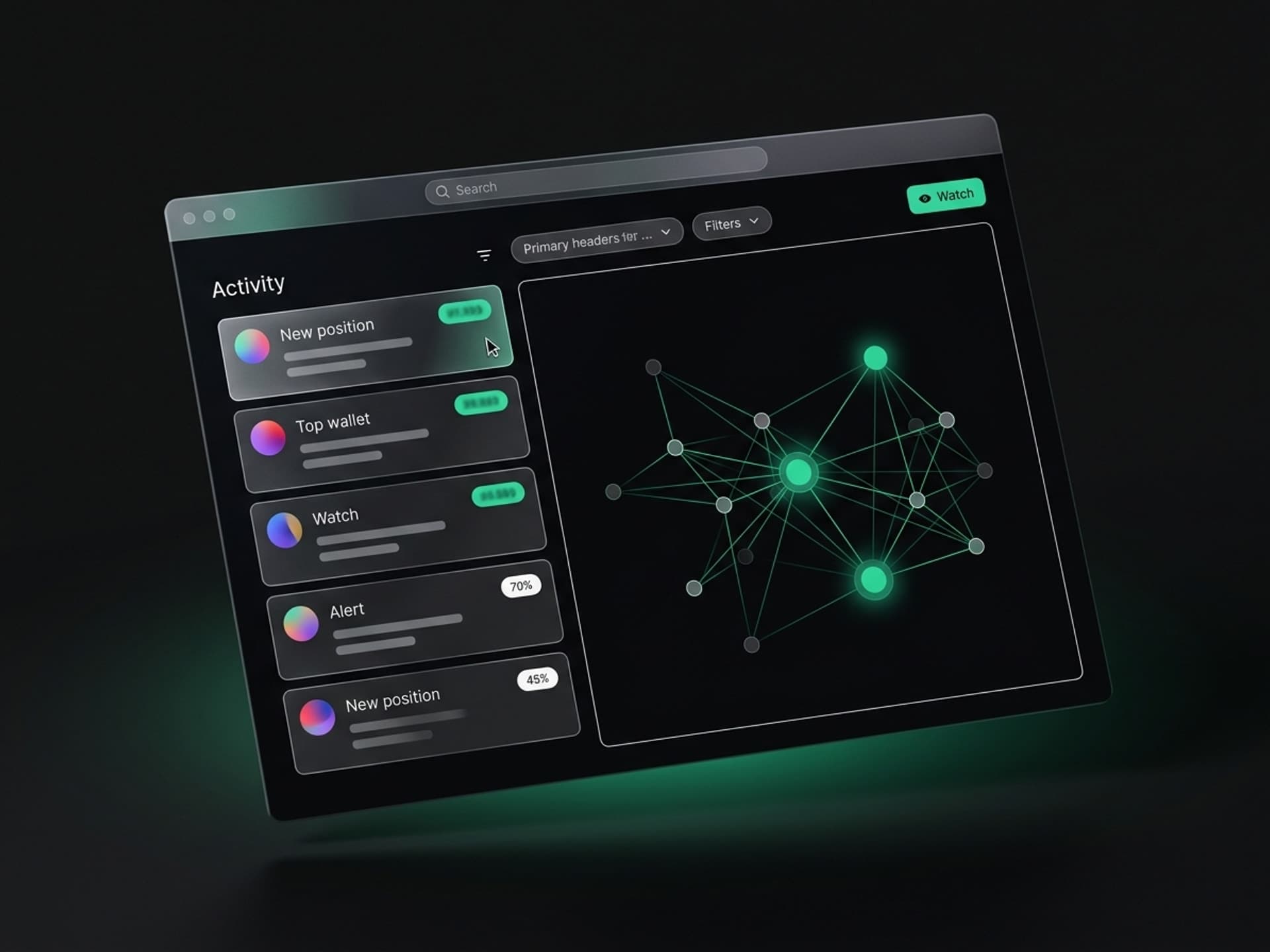
Follow Polymarket smart money before the public.
What Augur Is Today
As of 2026, Augur is effectively dormant for high-volume trading. The protocol still exists; markets can technically be created. But active trading is minimal. The community has largely migrated to Polymarket or built new venues.
Augur's legacy is the architecture: optimistic oracle, decentralized settlement, on-chain order books. These ideas migrated forward. The branding lost.
Why This Matters for Smart-Money Trackers
Smart money flows to depth. Augur never had it. Polymarket has $200M+ open interest on top markets and $50M+ daily volume. That depth is what makes Polymarket's wallet activity worth tracking — small markets don't have the size for compound smart-money edge.
If you're tracking smart-money flow across decentralized prediction markets in 2026, Polymarket is essentially the only venue with enough volume to matter. WinPolymarket is the smart-money layer on top.
Claim your spot for pre-beta access →
Pre-beta opens July 2026 with a 5,000-player cap.
What the Augur → Polymarket Lesson Implies
The same dynamics that killed Augur could pressure Polymarket. Specifically:
- Regulatory risk. Polymarket's geo-restrictions are getting tighter. If major jurisdictions follow the US, Polymarket could lose meaningful user base.
- L2 competition. New L2s (Base, Arbitrum) host competing prediction markets. If liquidity migrates, Polymarket's depth advantage could erode.
- Centralized exchange competition. Kalshi is gaining ground in the US regulated lane.
Polymarket won the 2020-2024 round decisively. The 2026-2028 round is open. Smart-money trackers will see migration patterns first via wallet activity.
Decision Matrix
| You want... | Use |
|---|---|
| Best liquidity, lowest cost, working UX | Polymarket |
| Permissionless market creation, full decentralization | Augur (or a successor protocol) |
| US-legal access | Kalshi |
| To follow smart-money flow | Polymarket + WinPolymarket |
For 99% of users in 2026, the answer is Polymarket. For DeFi historians, Augur deserves study.
Frequently Asked Questions
Is Augur still operational in 2026?
Technically yes, but with negligible active trading. The protocol still exists on Ethereum mainnet and markets can be created. But volume is minimal and the community has migrated elsewhere.
Why didn't Augur scale?
Three structural reasons: (1) Ethereum mainnet gas costs made small trades uneconomical, (2) DApp UX assumed crypto-native users, (3) AMM-based liquidity fragmented across many small pools. Polymarket addressed each: L2, web UX, unified CLOB.
Was Augur ahead of its time?
Partly. The architecture (oracle-based settlement, permissionless markets) was visionary. The implementation timing was bad — 2018 Ethereum could not support a retail prediction market at scale, and the UX assumptions of the era were too crypto-native for mainstream adoption.
Can I still place a bet on Augur today?
Technically yes. The protocol is alive on Ethereum mainnet. Practically, no — there's no meaningful liquidity to trade against. Try Polymarket (nofollow) instead if you're outside the US, or Kalshi if you're US-based.
What did Augur do that Polymarket should adopt?
Permissionless market creation. Polymarket has tighter controls on which markets get listed; Augur let anyone create any market. The trade-off is between curation quality and creator freedom. Polymarket's curation has been broadly successful but limits some niche markets that Augur would have hosted.
Will any new decentralized prediction market challenge Polymarket?
Possibly. Several new entrants on Base, Arbitrum, and other L2s are attempting it as of 2026. None has reached meaningful depth yet. The depth flywheel is hard to break — users go where the liquidity is, and the liquidity is on Polymarket. Claim your spot for our coverage of new entrants.
Are decentralized prediction markets a fad?
No. The volume on Polymarket alone has proved the category. The question is which specific venue dominates. Augur proved the architecture works at small scale; Polymarket proved it works at billion-dollar scale.
The Bottom Line
Augur built the architecture. Polymarket built the product. The structural decisions that mattered most: L2 for cheap gas, polished UX for non-crypto users, and unified CLOB for serious liquidity.
For traders in 2026, Polymarket is the only decentralized prediction market with enough depth to matter. WinPolymarket is the smart-money tracker on top.
Claim your spot for pre-beta access →
WinPolymarket is independent and not affiliated with, endorsed by, or sponsored by Polymarket Holdings PBC or the Augur Project. All trademarks belong to their respective owners.
Want in early? Claim your spot on winpolymarket.com →