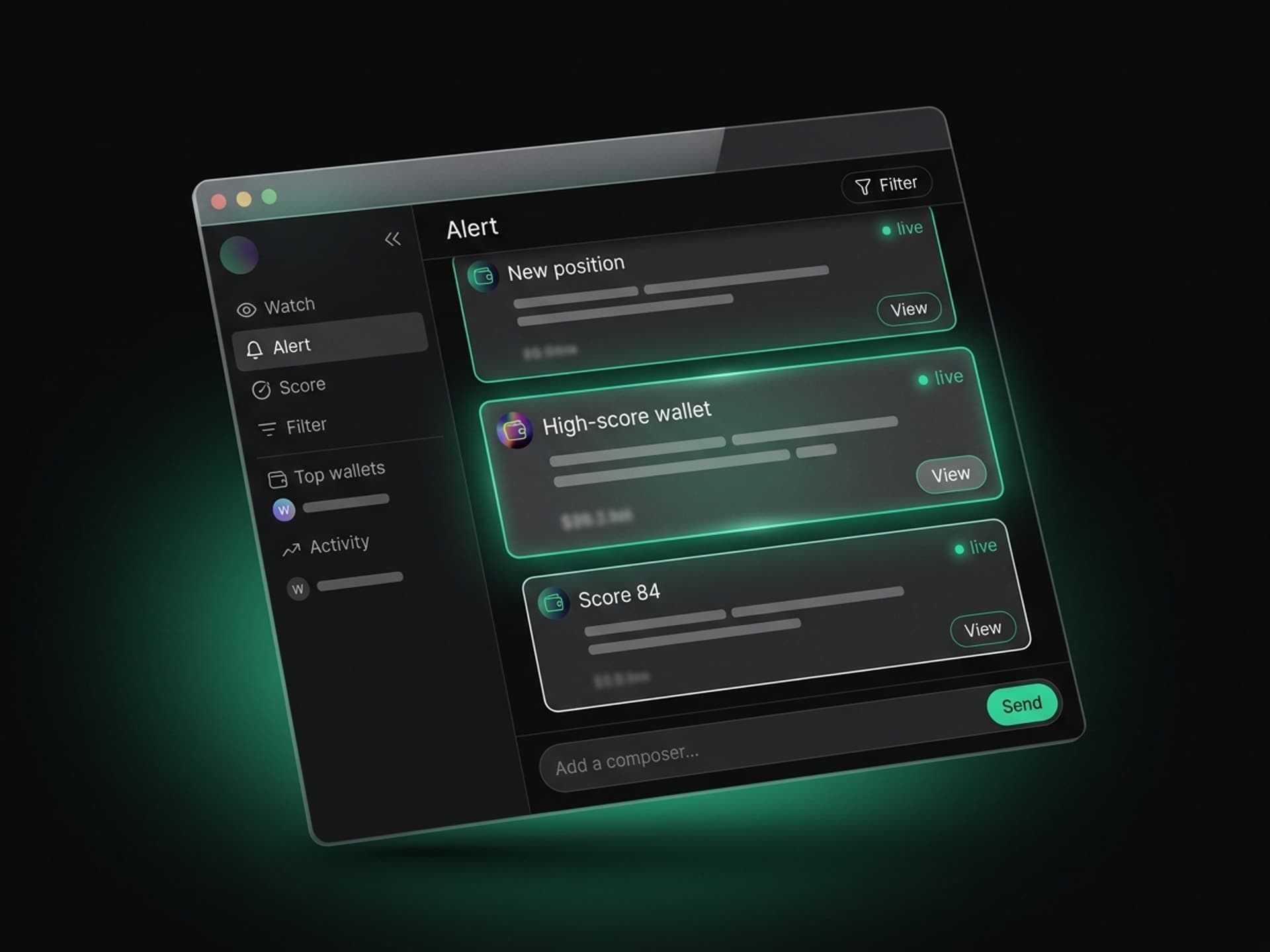
What Is Polymarket? The 30-Second Answer
Polymarket is a decentralized prediction market where users trade real-money contracts on future events — elections, sports, crypto prices, geopolitics, anything with a defined outcome. Contracts settle to $1 if the event happens and $0 if it doesn't, so the live price is the market's probability estimate in dollars. The platform runs on the Polygon blockchain, settles in USDC, and reached over $8B in cumulative trading volume during the 2024 U.S. election cycle alone.
WinPolymarket is an independent prediction-market tracker for Polymarket. We surface insider flow, whale moves, and the trades that price action follows before public news. Want first access when our tracker opens? Claim your spot for pre-beta access — the first 5,000 emails get in.
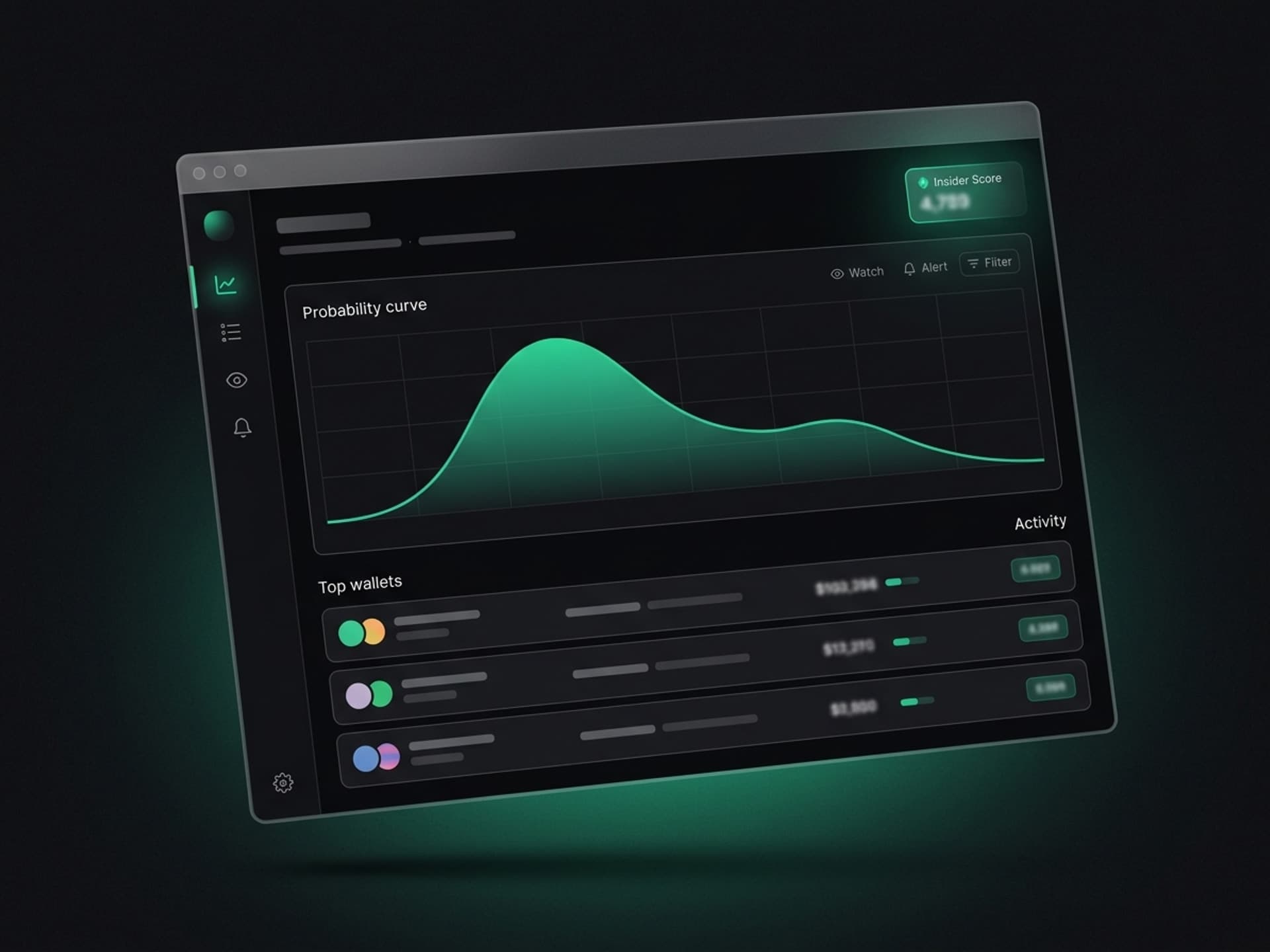
Follow Polymarket smart money before the public.
Why Prediction Markets Beat Polls
Pollsters ask people what they say they will do. Prediction markets ask people to put real money on what they actually believe. The economic incentive flips out lazy or strategic answers and rewards anyone with private information or sharper analysis.
- Polls are weighted samples of ~1,000 — 2,000 respondents, often with multi-day lag.
- Polymarket aggregates thousands of independent bettors continuously, in real time, with skin in the game.
- In the 2024 cycle, Polymarket priced the Trump presidency at 60%+ for weeks before any major poll moved.
This is the core reason hedge funds, journalists, and traders now check Polymarket alongside Bloomberg. It is a real-time price discovery engine, not a survey.
How Polymarket Works — The Five Things You Need to Know
1. Markets are binary contracts
Each market is a yes/no question with a defined resolution date and source. Example: "Will Bitcoin close above $200K on December 31, 2026?" If yes, the YES contract pays $1. If no, the YES contract pays $0. The NO contract is the mirror image.
Live prices sit between $0.01 and $0.99 and represent the implied probability — a YES contract trading at $0.43 means the market prices the event at 43%.
2. Settlement is USDC on Polygon
Polymarket is non-custodial in practice: you fund a smart-contract wallet with USDC on the Polygon network and trade through Polymarket's order-book interface. There are no fiat rails on the platform — you bring USDC, you take USDC out. Gas on Polygon is typically under $0.05 per trade.
3. Trading fees are 0% (but there are catches)
The platform charges no trading fee on most markets. The catches are:
- Polygon gas fees (small but real)
- A 2% withdrawal fee in some flows (varies)
- Slippage on thin markets — a $5K bet on a low-volume market can move the price 5% by itself
For most users, all-in costs are still 5 — 10x cheaper than traditional sportsbooks (which run 5 — 10% vig per bet).
4. The U.S. is geoblocked
Following the 2022 CFTC settlement, Polymarket is not available to U.S. persons. Geolocation blocks signup from U.S. IPs and KYC is enforced at withdrawal. The closest U.S.-legal alternative is Kalshi, a CFTC-regulated event-contracts exchange — we cover the differences in Polymarket vs Kalshi.
5. Order books are public and on-chain
Every trade on Polymarket is publicly visible on Polygon — wallet addresses, position sizes, entry prices, exit prices. This is the most overlooked fact about the platform: anyone can see what every other trader is doing. The interesting question is not "what did the whales bet?" — it's "which whales were right, and what are they betting now?" That is the entire purpose of WinPolymarket.
How Big Is Polymarket Really? Real Numbers
| Metric | Value | Period |
|---|---|---|
| Cumulative trading volume | $8B+ | 2024 U.S. election cycle |
| Volume on election day 2024 | $170M+ | Single day |
| Active monthly traders | ~70,000 | Late 2024 |
| Average trade size | $120 — $180 | 2024 — 2025 average |
| Largest reported single position | $30M+ | 2024 presidential market |
| Concentration of profits | 67% of profits → top 0.1% of accounts | Public on-chain analysis |
That 67% concentration is the number that matters. The vast majority of Polymarket profits flow to a handful of wallets — some are sharp analysts, others appear to have non-public information. Sorting one from the other is the smart-money tracking problem.
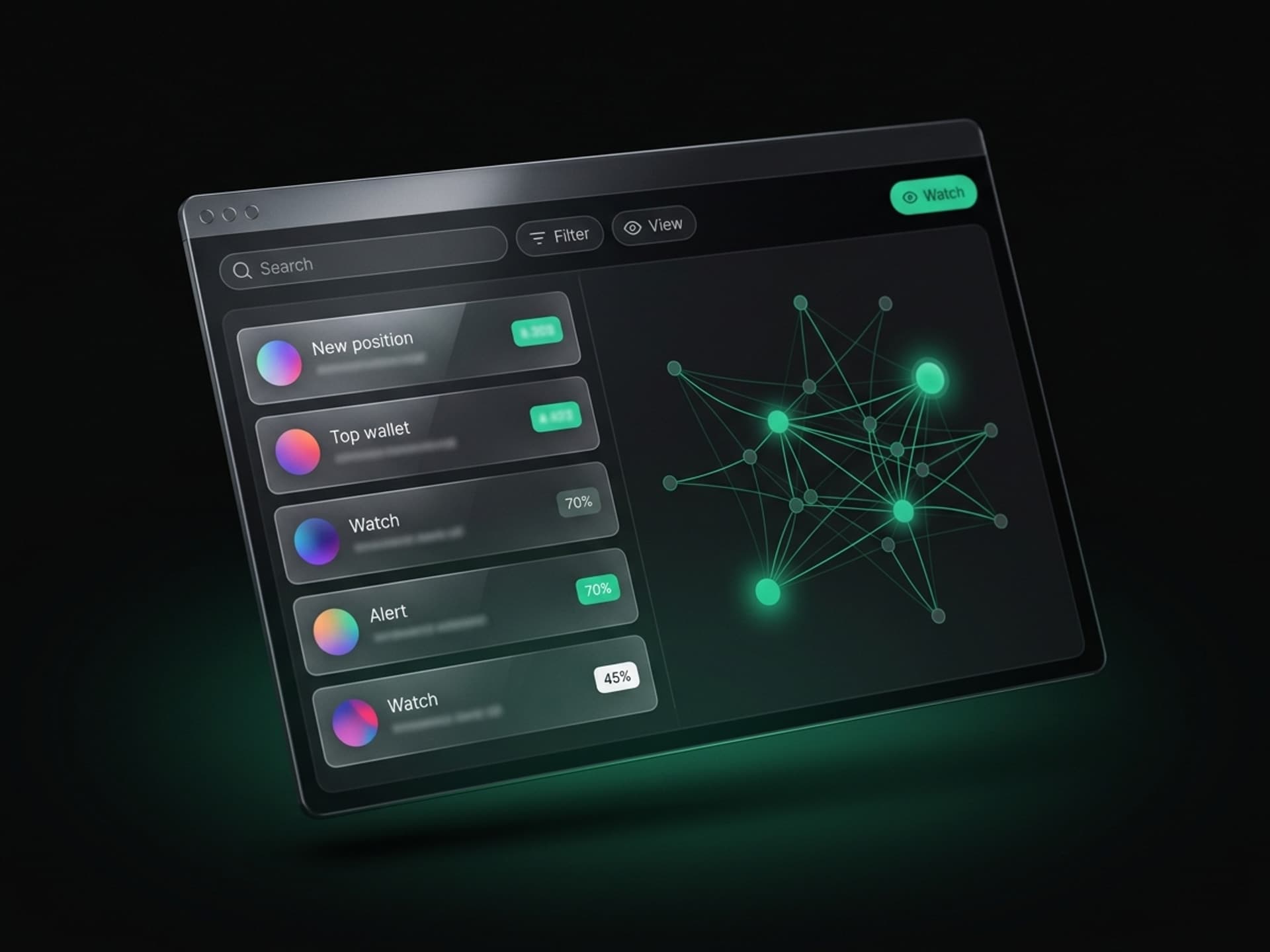
Follow Polymarket smart money before the public.
Why This Matters for Smart-Money Trackers
Here is the gap nobody is filling well: Polymarket's UI shows you the current price, but not who is moving it. When a fresh wallet drops $250K on a previously thin market two hours before public news drops, the price reacts — but the average user only sees the price change, not the cause.
WinPolymarket scores every active wallet by:
- Wallet age vs market age
- Historical accuracy in this category (politics / sports / crypto / geopolitics)
- Trade size relative to market depth
- Timing relative to news events
The output is an Insider Score (0 — 100) per wallet — a heuristic v1, ML-trained v2. When a high-score wallet enters a market, you get the alert. The pre-beta launches with a 5,000-player cap.
Claim your spot for pre-beta access →
How to Start Using Polymarket (5 Steps)
Step 1: Get on the WinPolymarket pre-beta
The tracker launches in July 2026 with a 5,000-player cap. The first 5,000 emails get in before the door closes. Claim your spot here so the launch alert lands the day doors open.
Step 2: Confirm Polymarket is available in your region
Polymarket geoblocks the U.S. and several other jurisdictions. Open polymarket.com — if signup is allowed, you are good. If not, do not use a VPN to bypass; that violates the platform terms and can lock funds.
Step 3: Fund a Polygon wallet with USDC
You need USDC on Polygon, not Ethereum mainnet. The cheapest path for most users is bridging from an exchange that supports Polygon withdrawals (Coinbase International, Binance, Kraken with the Polygon network selected). Full walkthrough: How to Deposit USDC on Polymarket.
Step 4: Start with small positions in liquid markets
Trade size = market depth. A $500 position is meaningful on a market with $50K of open interest; it is invisible on a market with $50M. Start with $20 — $50 positions in the highest-volume markets (elections, major sports, BTC price) until you understand how slippage and resolution work.
Step 5: Track your wallet and compare to the leaderboard
Every wallet on Polymarket is public. Note your wallet address, follow your own P&L curve, and compare to the leaderboard (nofollow). If you cannot beat a random sample of public wallets after 30 days, you are paying the smart money — start following them instead.
Frequently Asked Questions
Is Polymarket legal where I live?
Polymarket is not available to U.S. persons as of 2026 following the 2022 CFTC settlement. It operates in most of Europe, Asia, and Latin America with KYC at withdrawal. The platform geoblocks restricted regions at signup. The closest U.S.-legal alternative is Kalshi, a CFTC-regulated event-contracts exchange — see Polymarket vs Kalshi.
How much money do I need to start on Polymarket?
The platform minimum is roughly $1 USDC per trade plus gas (~$0.05 on Polygon). Realistically, $50 — $200 lets you test the mechanics across a few markets. Serious traders we cover at WinPolymarket run $5K+ bankrolls, but you absolutely do not need that to learn. Join the waitlist for our launch alert.
Are Polymarket prices accurate?
In liquid markets — yes, often more accurate than polls or expert forecasts. Polymarket priced the 2024 Trump presidency at 60%+ for weeks before any major poll. In thin markets ($10K open interest or less) prices can be moved by a single trader and should be discounted accordingly. Liquidity is the variable to watch.
Is it safe to put $10K on Polymarket?
The smart-contract risk is low — Polymarket has run since 2020 with no major exploit. The bigger risks are regulatory (your region could change rules), liquidity (large positions are hard to exit in thin markets), and resolution disputes (rare, but they happen on ambiguous markets). Most $5K+ bankroll traders spread across 5 — 20 markets, never one.
How are Polymarket markets resolved?
Most markets resolve via the UMA optimistic oracle: anyone can propose a resolution, and a bond-backed dispute window allows challenges. Ambiguous markets occasionally produce dispute battles that take days. Read the resolution criteria carefully before placing a large bet — that is the single highest-edge thing a beginner can do.
Can I track other traders on Polymarket?
Yes, every trade is public on Polygon. You can manually copy any wallet address into a block explorer and follow it. WinPolymarket automates this with Insider Scores per wallet — we rank 70,000+ traders by historical accuracy, position size, and timing, then alert you when high-score wallets enter a market. Claim your spot for pre-beta access.
What is the difference between Polymarket and a sportsbook?
A sportsbook is the house — they set odds with a 5 — 10% vig and want you to lose. Polymarket is a peer-to-peer market — you trade against other users, the platform charges 0% on most trades, and prices move on supply and demand. The upside: dramatically better effective odds. The trade-off: no customer support, no chargebacks, no fiat rails. It is closer to a brokerage than a casino.
The Bottom Line
Polymarket is a real-time probability engine with billions in volume, public on-chain order books, and zero trading fees. The catch is that 67% of profits go to the top 0.1% of accounts — most of whom are visible if you know where to look.
WinPolymarket is the independent tracker built to surface that flow. Pre-beta opens July 2026 with a 5,000-player cap.
Claim your spot for pre-beta access →
WinPolymarket is independent and not affiliated with, endorsed by, or sponsored by Polymarket Holdings PBC. All trademarks belong to their respective owners.
Want in early? Claim your spot on winpolymarket.com →